
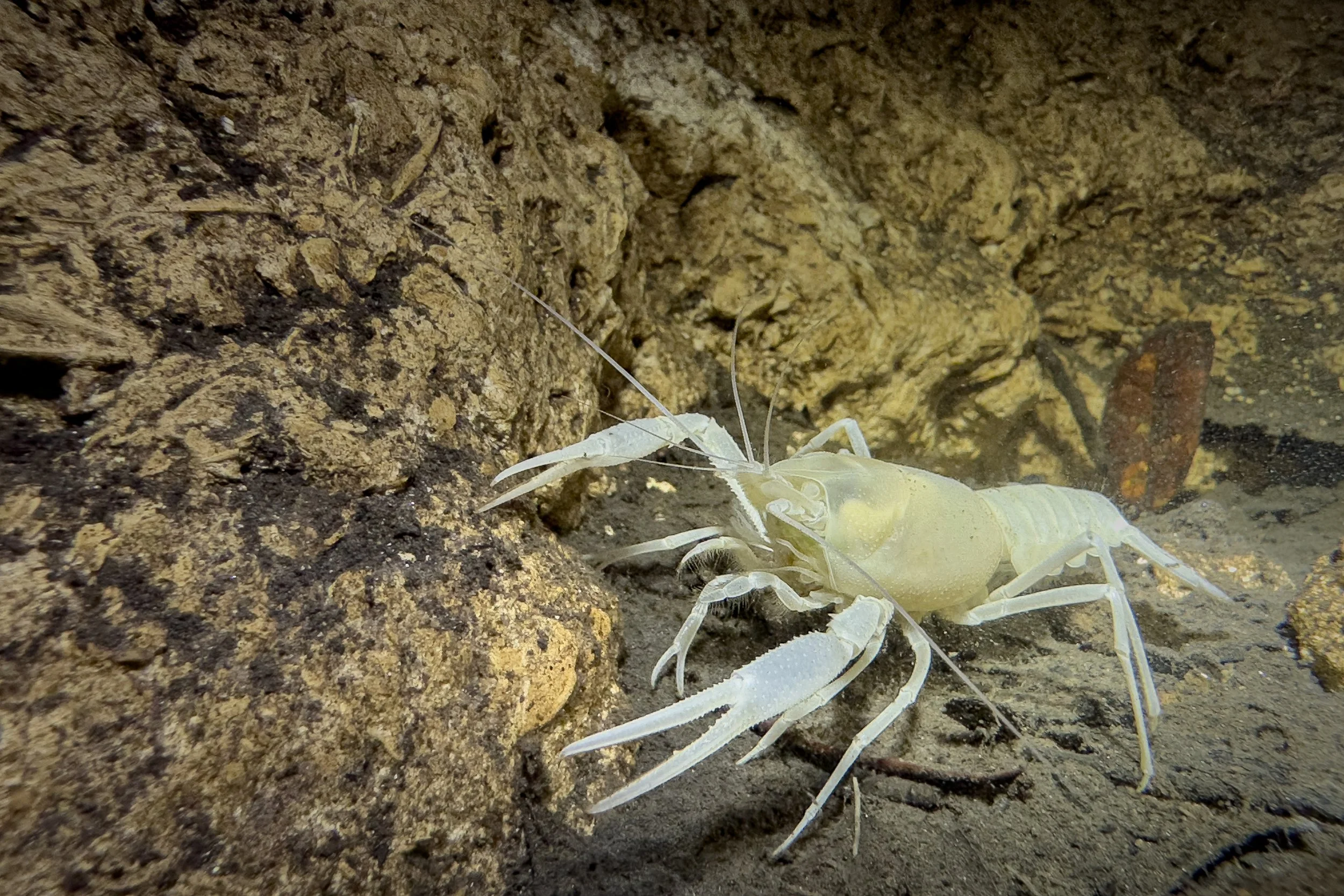
Uncovering the Secrets of Florida’s Cave Crayfish
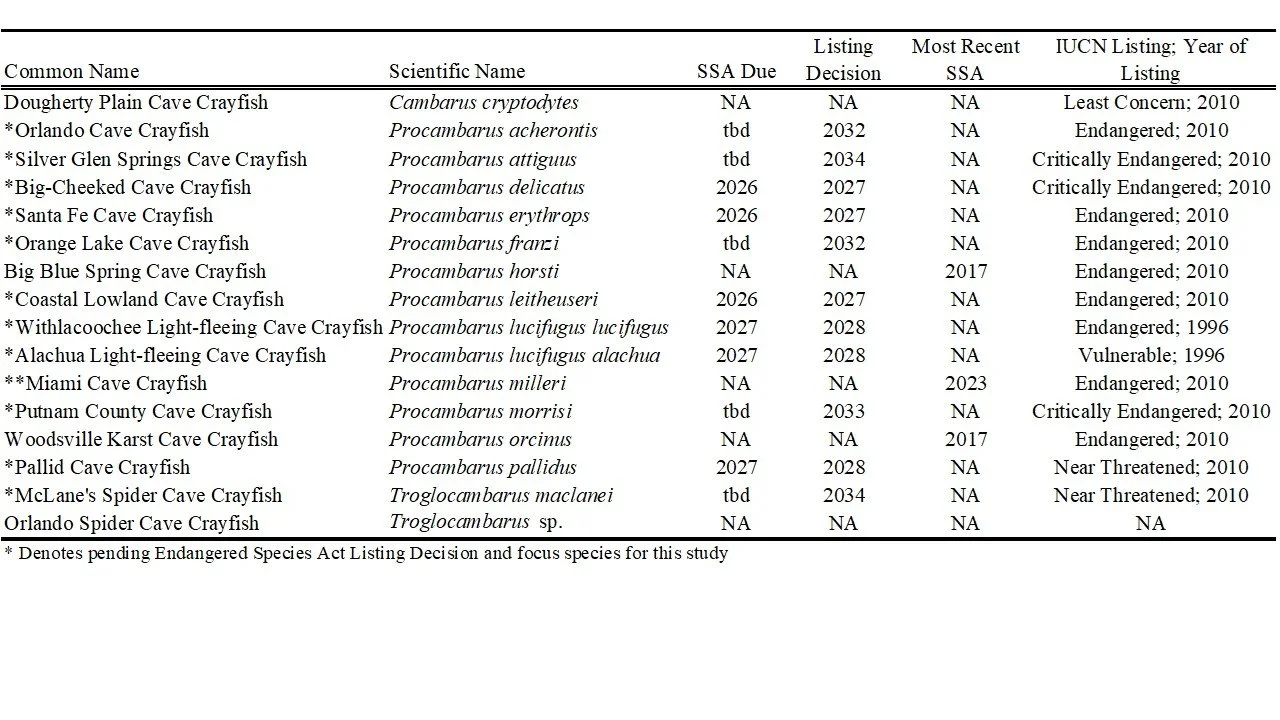
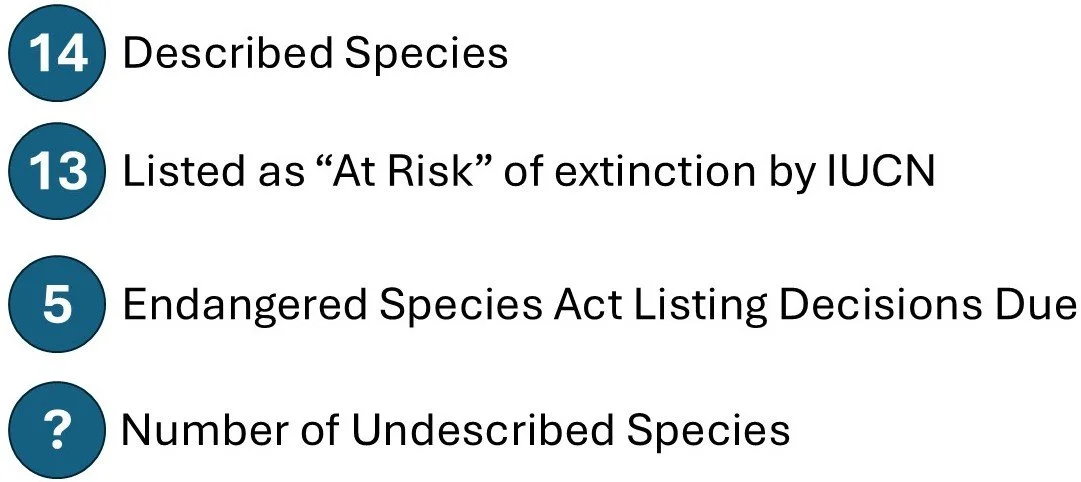
Florida is home to the highest diversity of Cave Crayfish in the world
THREATS

Water Quality / Pollution
Cave Crayfish are incredibly sensitive to water quality changes. The aquifers and caves in which they live have tested positive for numerous pollutants and harmful chemicals including nitrate-nitrogen, SSRI’s , insecticides, and heavy metals such as copper, cadmium, zinc, lead, nickel, and mercury. These can directly harm crayfish and their food sources.

Groundwater Extractions
Over 90% of Floridians rely on drinking water from aquifers. Farms, mines, and many industries rely on aquifer water. This has led to unprecedented groundwater withdrawals, reducing the amount of water and flow in underground caves and springs. This threatens cave crayfish by altering their habitat, increase subterranean salinity levels, and reduce food availability.

Small/Isolated Populations
Some cave crayfish are only found in a single spring or cave system. This makes them highly vulnerable to local impacts such as sudden environmental changes, pollution, and environmental terrorism.

Development
Development of natural areas harms cave crayfish through introducing pollutants to groundwater, increasing groundwater demand, reducing healthy nutrients from entering cave systems, increasing rates of cave collapses and sinkholes,
METHODOLOGY & PROJECT SCOPE
Cave Quality Assessment
A method for rapidly assessing the quality of caves for cave crayfish will be developed. This may include retrieving and analyzing substrate cores, and surveying biofilm composition. Substrate type will be determined by taking a sample of soil with methods adapted from Loughman et al., 2012. A soil core will be taken, oven dried, cleaned of extraneous debris, ground with mortar and pestle, then filtered through sieves to determine soil type. The relative proportion of soil types will be calculated based off the proportion in comparison to the total mass of the sample. Water quality will be measured including dissolved oxygen, salinity, temperature, pH, specific conductance, nitrate-nitrite nitrogen, pesticides, herbicides, and heavy metals (Cu, Pb, Zn, Ni, Mn, Fe, Cd, Cr, and Al). Correlations between water quality and crayfish abundance/presence will be analyzed through adaptation of the methods from Çil et al., 2023. Historic water quality and quantity will be summarized and reviewed.
Population Abundance and Distribution Surveys
We aim to assess the distribution of Florida’s cave crayfish using trapping techniques, visual surveys, and detection of environmental DNA (eDNA). Methods for conducting eDNA surveys for target species will be developed using methods adapted from Dougherty et al., 2016. Historic occurrences will be compiled and summarized. Sites will be revisited and surveyed for current occurrences and data will be used to estimate changes in geographic ranges. Priority will go to peripheral sites; interior sites will be sampled if time allows. Additional sites and wells may be sampled to better estimate geographic ranges. Population abundance may be estimated at select sites using mark recapture studies with methods adapted from Huntsman et al., 2020. eDNA will be used for estimating relative abundance following methods adapted from Dougherty et al., 2016.
Land Use and Climate Scenario Modeling
Evidence for global climate change is unequivocal; common changes include, but are not limited to precipitation, global sea level rise, increased ocean salinity and acidification, and increased extreme weather events (IPCC, 2021). Land use data from FDEP will be analyzed over each species’ geographical range. Modeling will be used to predict future water use scenarios and nutrient inputs into the aquifer.
Sea level rise can affect the salinity of discharged groundwater (Wood and Harrington, 2015) which can be exacerbated by groundwater withdrawals (Scharping et al., 2018). As sea levels are rising (IPCC, 2021) concurrent with increasing groundwater withdrawals (Marella, 2020), saltwater intrusion may be a major threat to the water quality within the Floridan aquifer.